What Is the Best Course of Action to Preserve the Atlantic Forest?
Skip to Content
The future of habitat restoration: the Atlantic Forest way
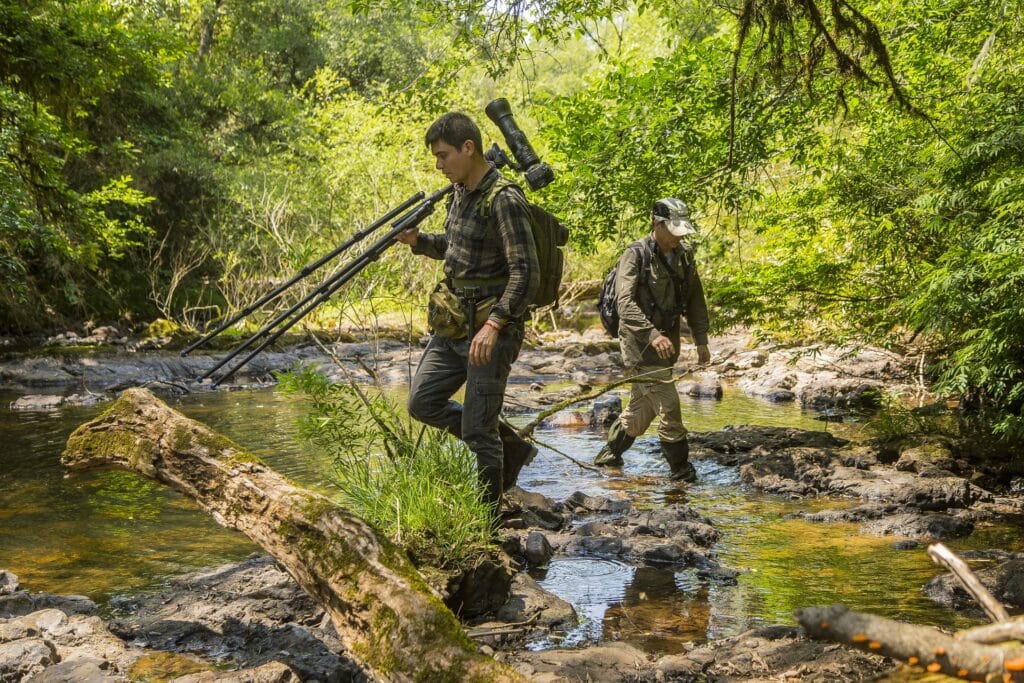
From new forest corridors to the production of shade-grown commodities, restoration work in the Atlantic Forest of Argentina, Brazil and Paraguay is crossing country borders and taking landscape conservation into new realms of ingenuity.
The Atlantic Woods was once an unbroken tapestry stretching from northeast Brazil along the coast down to northern Argentine republic and Paraguay. Considered ane of the elevation v global biodiversity hotspots and historically i of the world'due south largest forests, the biome has been significantly degraded, and now merely xvi% remains: the ancient tapestry is in tatters.
Despite this dire state of affairs, isolated patches of Atlantic Wood yet provide key services to millions of people and habitat for important species. The restoration challenge is to reconnect these patches and weave the tapestry whole once again.
It is of course non simple, and innovative solutions must be found. The aboriginal Atlantic Woods tapestry is now a modernistic patchwork landscape – a social too as an ecological organization – significant that for conservation success and restoration to exist sustainable, the needs of people today must be met without compromising the time to come.
A landscape approach
One style to accomplish this is through the sustainable production of bolt. "Today, conservation-friendly production is considered not simply innovative," says Andrés Bosso from Aves Argentinas (BirdLife in Argentina). "It is also perceived as a positive and – thinking empathetically – inevitable class of action."
Drivers of deforestation such as timber sales, cattle farming or even illegal marijuana cultivation are oft also sources of immediate income for local inhabitants with few viable alternatives. Such is the case for a large number of smallholders inhabiting what remains of the Atlantic Woods. Transitioning to sustainable country-utilize practices – a truly modernistic approach if washed properly – is thus a fundamental conservation goal.
To brand this work, BirdLife and Partners are seeking solutions that make economic equally well as ecological sense. Forest restoration is inextricably linked with land-use practices and policy, strategic alliances and co-management, market-driven agroforestry projects and ecotourism. For the iii Atlantic Forest BirdLife Partners – Aves Argentinas, Guyra Paraguay and Salvage Brasil – all of these strategies are on the tabular array.
Connecting the dots
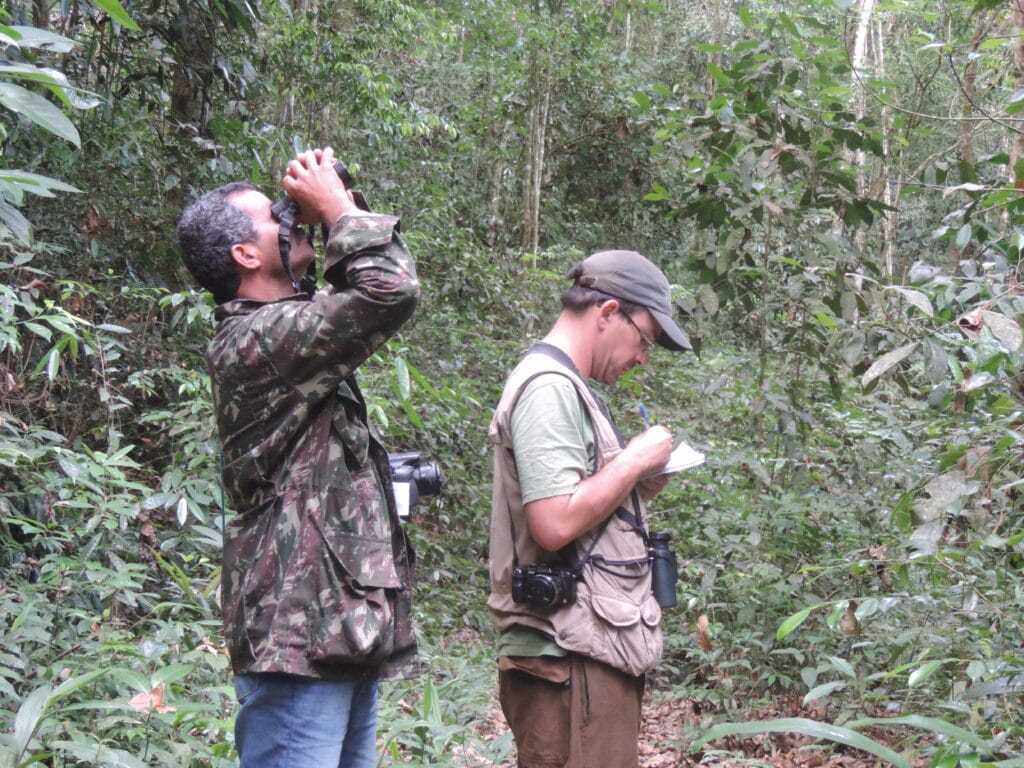
In BirdLife'due south Atlantic Wood Program, restoring ecological connectivity and thereby recovering overall forest health basically boils down to two interweaving threads: joining one forest fragment to some other, and working with the right people.
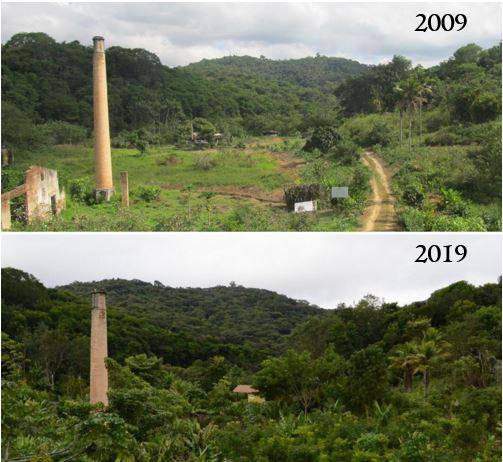
In the northern reaches of the biome, Salve Brasil helped constitute and support the management of the half-dozen,000-hectare Murici Ecological Station and purchased 360 hectares of Atlantic Wood in the 100-km distant Serra do Urubu, where a private reserve was established. With these two strongholds, Save is at present designing a Serra do Urubu-Murici forest corridor to connect existing woods patches between the two sites, and prioritise areas for forest restoration.
There are substantially two means to restore a woods: yous can fence off forest fragments and let nature do the rest, or you lot can plant native plant seedlings and monitor them to ensure optimal survival rates and actively reconstruct the original habitat. In many cases, a mixed approach is used.
'Jump starting' forest recovery with active restoration gets things moving but is expensive. Passive restoration is cheaper, just it takes a long time. Salvage Brasil is doing both, having started restoration activities within the Murici Reserve, and helping to constitute a network of native found nurseries, seed collectors and knowledgeable individuals to deliver and monitor restoration efforts in the region.
When the idea is to restore the natural catamenia of things, nature always helps out: planting more trees effectively attracts more birds and insects, which and so actively have over much of the required ecological basis piece of work to regenerate the ecosystem.
Even with help from the birds, forest restoration is a massive attempt that can rapidly exhaust resources. Nor is it guaranteed to piece of work, particularly if conservationists neglect to consider the presence of human residents and their activities. In the Atlantic Forest, this typically means farmers and livestock producers.
"We desire to encourage a arrangement that combines agriculture, animal rearing and forest restoration, and generates mixed-revenue streams to help keep forests standing," says Alice Reisfeld, Salve Brazil Program Manager. "We await this approach to have measurable benefits for the livelihoods of local landowners."
Matters can get complicated when the landowners involved are reticent, even when the dialogue is about sustainable production practices that will benefit them. "Many landowners are not aware of the possibility of raising crops and cattle in a more sustainable way that will increase their productivity and help them access new markets, while also generating environmental services," says Bárbara Cavalcante, Co-ordinator of the Northeast Atlantic Woods Project, Salvage Brasil. "That's why we will implement demonstrative units in a few properties, and so that others can also learn and permit replication of this model."
It starts with a cup of tea
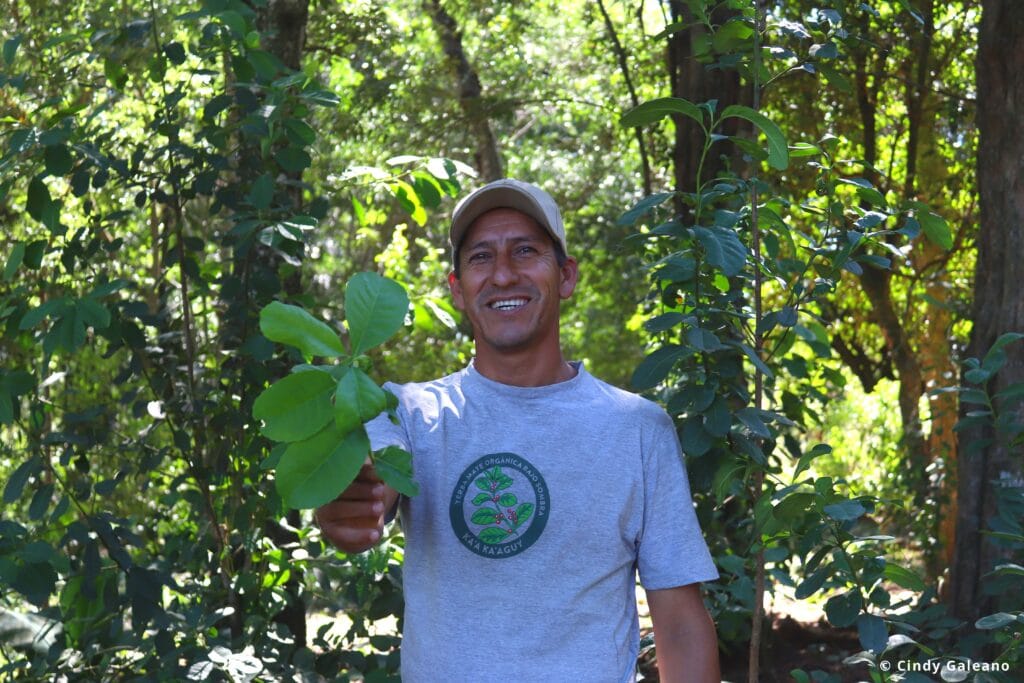
Meanwhile, in the southern Atlantic Forest, Guyra Paraguay and Aves Argentinas are under similar pressure to reconcile wood restoration with local economic interests. Their principal reply to this conundrum is shade-grown yerba mate (used to make a popular caffeinated drinkable), an impressively simple yet sophisticated agroforestry initiative whereby local producers receive a premium for a forest-friendly product.
Guyra Paraguay is looking to take its shade-grown yerba mate model to scale. However, equally ever at that place are challenges. Amidst these is the illegal production of marijuana in the San Rafael Reserve. The prospect of producing forest-friendly yerba mate lone is often insufficient to convince smallholders to forego the highly lucrative marijuana business, a major driver of forest deposition and forest fires. For such reasons, Guyra Paraguay is promoting the diversification of smallholder farms, so that farmers can tap into multiple income streams at different times of the year.
Cantankerous-border restoration
A key element in scaling the shade-grown yerba mate initiative is to piece of work with other organisations wanting to do the aforementioned things for the same reasons. Thus, Guyra Paraguay has teamed upward with Aves Argentinas to stitch together farms adopting forest-friendly yerba mate production to create an 'eco-productive' corridor linking Atlantic Forest fragments and Key Biodiversity Areas betwixt south-eastern Paraguay and due north-eastern Argentina.
This corridor is already showing measurable benefits for birds and other biodiversity inside the agroforestry plantations; furthermore, it provides a framework for the shade-grown yerba mate initiative to expand, all the while growing synergy betwixt the relevant BirdLife Partners and their respective local alliances. Such alliances are the stuff of 21st century conservation.
By way of localised patchwork initiatives, the Atlantic Wood every bit a whole is gradually being reassembled. Working alongside and in the interests of the local people who work and influence the landscape, BirdLife Partners and their allies are implementing mod conservation initiatives that draw transformative power from the union of economy with ecology. Piece by piece, the Atlantic Forest tapestry is gradually being woven dorsum together again.
Josefa Caetano, a farmer in Brazil's Atlantic Forest, captures the reason why this is working: "I could cut everything down, sell all the wood and institute crops, but I don't exercise this because I understand the damage I would cause for the future."
This Atlantic Forest work is currently supported by the Aage Five. Jensen Clemency Foundation, the Hempel Foundation, WWF-Brazil, Trillion Trees and the BirdLife Forest Accelerator program.
"I could cut everything down, sell all the forest and plant crops, but I don't do this because I understand the harm I would cause for the future."
Josefa Caetano, a farmer in Brazil'southward Atlantic Forest
Stay up to engagement
Our monthly newsletter curates the most fascinating articles across the BirdLife Partnership to save birds, nature and people.
Source: https://www.birdlife.org/news/2021/12/01/the-future-of-restoration-the-atlantic-forest-way/
0 Response to "What Is the Best Course of Action to Preserve the Atlantic Forest?"
Postar um comentário